
Pet Owners & Veterinarians on Life With Allibre
Dogs and cats, in their owners’ and veterinarians’ own words: a fuller collection of the experiences behind the data.
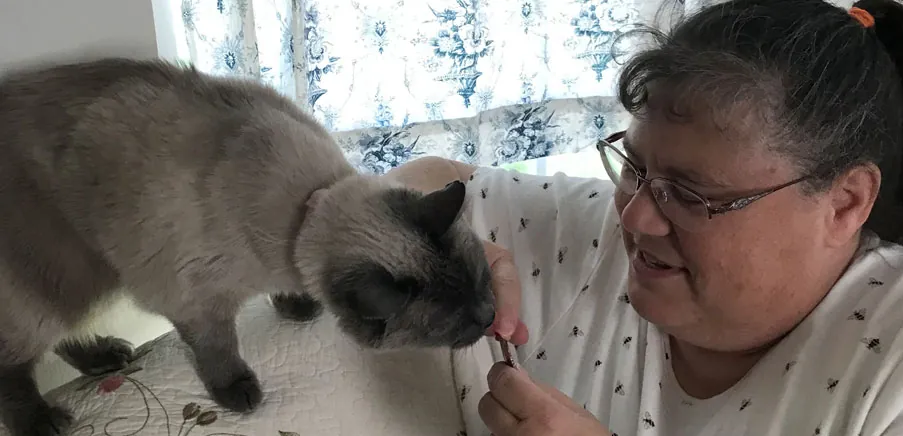
Amanda G. & Reba, Kentucky. How a rescued Siamese cat found relief from chronic allergies.
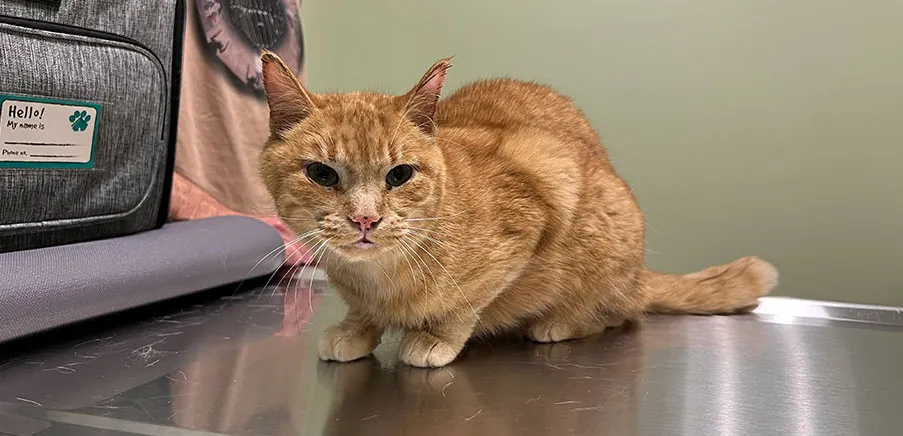
Bill M. & Scout: a 9-year allergy journey. Off steroids entirely, Atopica cut in half.
From Pet Owners & Veterinarians

“It’s made it a lot easier to give her the medication. It’s a game-changer. It’s life-changing.”

“We are very pleased to have chosen to try your transdermal immunotherapy for Leo. Over the course of a year, we have noticed how much Leo’s condition has improved.”

“We’ve been able to take him off steroid treatments entirely and reduce his Atopica by half. It’s had a major improvement on his quality of life.”
“It has been life changing! Ted used to have constant ear infections and other allergy-related problems. Now he only goes to the vet for regular checkups.”

“Transdermal immunotherapy has been a great additional desensitization tool for my patients. Many of my clients find the topical administration easy and it allows the human-animal bond to stay intact.”

“I am very pleased with my first experiences with Allibre transdermal cream for atopic dermatitis in my two Westies. Both dogs have had a good response to the formulation.”
Hear It From the Clinic
A veterinary dermatologist in Louisville, Kentucky, on prescribing transdermal immunotherapy, including Reba’s case.
Read the transcript
0:00 Introduction · 0:35 Why transdermal immunotherapy · 1:21 Choosing an option the family can stick with · 2:33 How it compares with shots and drops · 3:28 Reba's case · 4:40 Explaining the treatment to pet parents · 6:03 Tip: leftover cream on the other ear · 6:26 Side effects and tolerance · 7:31 What pet parents say · 8:14 Staying current in dermatology · 9:05 How veterinary dermatology has changed · 10:25 Apoquel, Cytopoint and getting a diagnosis · 11:54 Advice for veterinarians · 13:11 How ordering works
Interviewer: Dr. Joy, can you tell us about your experience and background as a veterinarian, including your areas of expertise and specializations?
Dr. Griffin: Sure. I'm Dr. Joy, and I'm a veterinary dermatologist in Louisville, Kentucky. I did a two-year residency in dermatology, so I specialize only in that, and I treat pets with skin problems, from allergic disease to autoimmune disease and endocrine disorders.
Interviewer: What led you to explore transdermal treatments for pet allergies, and how do you incorporate them in your practice?
Dr. Griffin: I've always been a big fan of immunotherapy as an option to treat allergic pets, but sometimes it can be challenging for owners to administer it to dogs or cats. The traditional form of immunotherapy is an injectable form, where you give a shot underneath the skin. Though most pets do that pretty well, there are a few individuals that are not willing participants in getting shots, and so we have to find other alternatives. When I found that there was the option to do transdermal immunotherapy, I was really excited about that, because it seems so easy. Really, any pet parent should be able to apply something to their pet's ear on a daily basis, so it seemed like a win-win situation.
Interviewer: What factors do you, as a veterinary dermatologist, consider when you're evaluating treatment options for pets with allergies, and how does Allibre Pet Allergy Cream fit into your treatment approach?
Dr. Griffin: When I start talking to the pet parent about immunotherapy, their ability to be compliant is first and foremost. If I recommend something that they can't do, if they can't get it into the pet or can't administer it as often as I recommend, it's going to be a waste to prescribe that therapy. So I usually sit down and have that conversation: do you think you can do allergy shots? Do you think you would be able to do sublingual immunotherapy? I explain the process and what's involved, and I try to assess the temperament of the pet. If the family is already telling me that this animal hides a lot, or that they scratch or bite, then I have to think of better or easier options for them.
With transdermal, it's super simple. It comes in a little dosing pen. You dial up the dose, apply it to the ear, and you alternate ears each day: left ear, right ear, left ear, right ear. I really love that. I think it's super simple. I have not had a single pet parent come back to me saying that they couldn't do it.
Interviewer: What benefits have you seen the transdermal treatment offer pets with allergies, compared to other forms of treatment like sublingual or injectable therapies?
Dr. Griffin: So far, in my experience, transdermal seems to have equal efficacy to the other administration routes of immunotherapy, subcutaneous and sublingual. I have a few feisty cats that we're doing transdermal on, and they tolerate it really well. So you know that the pet parent is compliant and that the animal is getting the appropriate dose of their immunotherapy, as you've recommended it, on a daily basis. I've seen patients go into remission and remain stable as far as their itch is concerned, and not require as many interventional treatments with steroids while they're on their transdermal. So it's worked really well.
Interviewer: Do you have any success stories or cases where you've seen notable improvements in a pet's allergies after prescribing Allibre Pet Allergy Cream?
Dr. Griffin: Yes. The client that has had the most success so far is Reba. Reba is a little feisty cat, a Siamese mix, we think. She suffers from inflammatory bowel disease in addition to allergic skin disease, and we found that she had atopic dermatitis. She requires steroids to control her IBD, and she's also on Atopica to control the inflammation and itching associated with her allergies. We allergy tested her and then started transdermal immunotherapy, and she's done really well. She doesn't come in as often anymore, because her skin has remained pretty stable on her medications, when before she would have flares and need to come in for treatment of secondary infections. She's now on a good maintenance, and we really haven't had to see her as often. That's really good, because she hates coming to the vet.
Interviewer: How did you educate them about how to use the transdermal treatment, and its benefits?
Dr. Griffin: I explained what we're going to do: we're going to test her, find out what she's allergic to, and based on her reactivity, we're going to create her personalized vaccine. It's going to be formulated into a transdermal, which you're going to apply daily to the ears, alternating ears: left ear, right ear, left ear, right ear, each day. And then I talked to her about it being a little dosing pen. You dial up the dose and just smear it on the ear.
To show you, this is how it comes packaged. It's sent to our clinic, and then the pet parent will come in. Allibre Pet Allergy Cream. What I love is that it says "Free your pet from pain and discomfort," which is really cute, and it says "Liberate your pet from allergic reactions." The packaging is really nice. It has the directions right there on the box itself: alternate ears daily, apply it to the inner flap, so it's the inside of the pinna. And it comes in this cute, nifty dosing pen. You dial up the dose, you click the bottom, and then you just have your little dose on there, and you smear it on the ear. Even I can do it. So it's super easy and convenient for the pet parent. I've had no complaints about it whatsoever. The tolerance of the pet is quite high. I haven't had any pet parent say that they can't do this, which is great.
Interviewer: What advice would you give a pet owner about taking care of the ears?
Dr. Griffin: Great tip. Because they're alternating ears, you apply it to one ear one day, and the next day you're going to apply it to the other ear. You can wipe off the residue on the opposite ear on the off day, when it's not being applied. I think that's totally fine to do. Or you can remove that residue right before applying the new dose.
Interviewer: Have you noticed any specific challenges or considerations that veterinarians like yourself should be aware of when prescribing transdermal treatments for pet allergies?
Dr. Griffin: Truly, I haven't seen any major side effects, really any side effects at all. I suppose that in a really reactive individual, because the immunotherapy has the allergens that they're reactive to in it, they could be a little itchy on that ear after administration. I really haven't seen that. I do think cats in general, if you put something on their ear flap, may flip their ear a little bit. It's just kind of an annoyance, because you've smeared something on their ear. I have had pet parents give me that feedback, but it's not enough to warrant doing anything differently. If you put something on my ear, it might be a little annoying too.
If they were to have redness or irritation, then I would stop the immunotherapy, and we would talk about that and maybe add an antihistamine on the days right before we dose the transdermal. We could try that, but I haven't had that feedback, so it's really well tolerated. With any reactions to immunotherapy, though, especially when we're starting it, I have the pet parent call, and we'll troubleshoot as needed.
Interviewer: What feedback have you received from pet parents about their experience with Allibre Pet Allergy Cream, and how it compares to other treatments?
Dr. Griffin: Overall, the most common feedback is that it's easy to do, and the cat or dog tolerates it well without any issues. It's very simple, so they can be compliant with the administration. That's good. Most of these pet parents have chosen transdermal from the beginning, so they haven't tried other forms yet. But I do have a couple who were unable to do the injectable form of immunotherapy, so they switched to transdermal, and they've had great feedback on compliance and the ability to do it. They're really happy with the ease of use.
Interviewer: How are you staying up to date on advancements in allergy treatment for pets, and how does that influence your approach to prescribing?
Dr. Griffin: As a veterinary dermatologist, I go to an annual dermatology conference with other veterinary dermatologists, and we learn about cutting-edge treatments: what's new, what's practical. I love to go to those to see what's coming down the pipeline for my practice. A lot of it really is just getting those products in my hands, where I can use them, try them on my patients, get the owners' feedback on how they're tolerated, and then see the efficacy over time. Of course, reading published journal articles is also very helpful, but I really like peer-reviewed things, where I can see how you use something and how it works in your practice, and maybe I can implement it in mine.
Interviewer: What major shifts have you seen in veterinary dermatology over the past five or ten years?
Dr. Griffin: Veterinary dermatology, I think, in the last ten years has had some major drugs come out that have changed how we treat our patients with atopic dermatitis, and the drugs are very effective and very safe, so they can really improve quality of life. I remember having an itchy dog as a child that really suffered, and at the time, the only treatment we had available was steroids. Back then, even flea control was not where it is now. We've got great flea control options that are very successful against ticks as well as mites, and mites can cause a lot of discomfort and itching in pets, as well as other skin conditions. So we've got another tool in our chest of treatment options for controlling flea allergy and mite disease. And then the anti-itch drugs like Apoquel and Cytopoint are great. Now we're also focusing on using antimicrobials judiciously, so there's a lot of focus on non-drug options for treating bacterial infections, where we're doing more topical therapy and restoring the barrier function of the skin. Those kinds of things are changing the way we think about infection.
Interviewer: What would you say to providers who may be relying on these medications when maybe they shouldn't be?
Dr. Griffin: I think Apoquel and Cytopoint are great anti-itch drugs, but sometimes they're overused, in the sense that we don't really know what we're treating. I think it's still important, if we're using those medications for an itchy dog, to do our diagnostics and figure out exactly why the dog is itchy. Sometimes we're missing that these are simple flea allergy cases, or maybe we're missing a diagnosis of scabies. I see people doing fewer diet trials and recommending immunotherapy less, because they're just dispensing these anti-itch drugs without actually knowing why, and without looking at long-term side effects and all of that.
Immunotherapy, for me, is still the mainstay of treatment, because it's actually going to prevent allergic flares over time, reduce the need for chronic drugs, and hopefully prevent the pet from getting worse and worse as it gets older. I think we've seen in practice that you keep giving Apoquel, and these dogs will still have allergic disease. They will still get infections. Sometimes they get what's considered refractory pruritus that no longer responds to the anti-itch drugs. I think if we used immunotherapy early on in those patients, they would go into remission from their allergic disease and not need so many drugs. That's always my favorite way to treat: to get them on immunotherapy once I've diagnosed a dog, or a cat for that matter, with atopic dermatitis.
Interviewer: What would you want veterinarians to consider when they're thinking about incorporating Allibre Pet Allergy Cream into their practice for managing pet allergies?
Dr. Griffin: If you're considering immunotherapy in an atopic pet, it's important to figure out what's going to be the best fit for that family long term, because immunotherapy is something we've got to be consistent with, at least for the first year, to see if it's going to work and allow it to work. I see too often that pet parents give up on it too soon. They need a lot of support, and I think a lot of that starts with the conversation in the beginning about what they're able to stick with.
Most veterinarians are aware that you can give some medications transdermally, especially to cats, and now knowing that we have this option as a way to administer immunotherapy is really great. We're seeing great compliance, it has amazing ease of use, and it's showing us as good efficacy as the other forms, traditional injectable subcutaneous immunotherapy and sublingual immunotherapy. It's working just as well. I think it's a no-brainer that we should add this to our toolbox of options for immunotherapy.
Interviewer: What are the most common questions you hear from pet parents when you talk about this?
Dr. Griffin: How do they get it? How do I order it? We explain to them that we're going to first test your pet and find out what they're allergic to, and then I'm going to formulate it by choosing which allergens I want to put in the immunotherapy. Allibre has a form that I can fill out to choose the allergens, I send that back to the company, and then they formulate the transdermal. They will receive, I think, two dosing pens. They dial up the dose, and apply it to the ear daily, alternating ears. So it's really simple to do. Adverse reactions are very uncommon. I really haven't seen them. It's super easy to administer, the dosing pen lasts about three months, and then they just call in, we refill it, and they stay on their immunotherapy and do really well.
Interviewer: I appreciate it. I hope you have a great rest of your week.
Dr. Griffin: Thank you. See you soon.
A veterinary dermatologist’s perspective on transdermal immunotherapy.
Read the transcript
0:00 Meet Dr. Rosenberg · 0:37 How transdermal immunotherapy works · 1:11 Treating the cause, not just the itch · 2:20 Side effects · 2:36 Which pets can use it · 2:50 His experience with Allibre · 3:21 Using it with other medications · 4:01 How pet allergies differ from human allergies · 5:19 Why allergies get worse with age · 5:58 Allergies and quality of life
Dr. Rosenberg: Hi, my name is Dr. Andrew Rosenberg. I'm a veterinary dermatologist with Animal Dermatology Clinic. I did my residency with Animal Dermatology Clinic in our Tustin, California office, and I now practice in our New York and New Jersey offices. I am both a practicing clinical veterinary dermatologist and a director of medical operations. I am also president-elect of the American College of Veterinary Dermatology.
Sure. The transdermal allergy treatment actually contains small amounts of what the dog or cat is allergic to. By applying it to the skin, those allergens are absorbed right through the skin, in a process called percutaneous absorption. The idea is that by giving small amounts of what that animal is allergic to, and by slowly increasing the dose we give over time, we can desensitize that pet to exactly what they're allergic to.
When we think about most traditional allergy treatments, most of them are actually medications, and they're not really getting to the root cause of that pet's allergies. The medications typically just mask the symptoms of allergy, which tend to be itching, scratching and secondary infections in the skin.
The idea of immunotherapy is to get to the root cause of the issue by desensitizing that pet to their underlying allergies. This way, we don't need to use medications to just mask the symptoms.
The other unique thing about Allibre transdermal immunotherapy is that, unlike traditional immunotherapy, which is administered by injection, like allergy shots, Allibre transdermal immunotherapy is actually a lotion that's applied to the ear flap. So where some pet owners, as well as pets, may be averse to needles and syringes, this is a much easier way of administration.
We always advise pet owners to look for any irritation at the site of application, but in my experience, I have not seen any adverse effects from the Allibre immunotherapy.
Absolutely. There's no breed or age restriction on using immunotherapy to desensitize a pet to their allergies.
I've had a great experience using transdermal immunotherapy from Allibre with my clients and patients. Clients love it because they don't have to give injections, and it's easy to administer to their pet. As far as quality of life for my patients, I really do think it improves their quality of life, and we're able to limit the amount of medication needed to keep that pet's allergies controlled.
Absolutely. Transdermal immunotherapy can be used in conjunction with other medications. Very often, while we're waiting for a good response to the transdermal immunotherapy, we do use additional medications to keep that pet's allergies under control.
The goal of immunotherapy, including transdermal immunotherapy, is to limit the amount of medication needed to keep a pet's allergies controlled, and sometimes actually eliminate all medications. However, when we're first starting the immunotherapy, it's important to use additional medications to keep that pet comfortable and controlled while we wait for a good response from the immunotherapy.
Pets' allergies are very different from human allergies. In humans, allergies typically cause inflammation in the nose and the eyes, which is why people get runny noses and runny eyes during allergy season. In dogs and cats, allergies typically cause inflammation and irritation in the skin, and when the skin gets inflamed and irritated, it can be really itchy. That's why, for most of our pets with allergies, the main symptom is scratching.
So when we treat a dog or a cat with allergies, it's important to control the itch and inflammation. We typically use medications for that, but the best treatment is really getting to the root cause: identifying what that dog or cat is allergic to, and starting them on desensitization therapy to desensitize them to those things, and really treat the root cause rather than just masking the symptoms with medications.
Just like with people, allergies in our pets are lifelong, so there's no real cure for them. The best thing to do is get to the root cause by desensitizing through immunotherapy, and thereby limit the amount of medication needed to control that pet's allergies.
Some other things that I think are really important for pet owners to know: very often, people, as they get older, can sometimes grow out of their allergies. It's actually the opposite with our pets. They tend to grow into their allergies. Their allergies tend to get worse as they get older, not better.
So it's really beneficial to start those pets on immunotherapy when they first start showing symptoms, at a younger age, before their allergies get really severe and lead to chronic changes in their skin.
Living with allergies can really severely affect a pet's quality of life. In some cases, a dog or cat can be so severely itchy that they spend the whole day scratching themselves and being fairly miserable. Not only does that cause the pet to be more irritable and uncomfortable, it can really degrade the relationship my client has with their pet.
If a dog or cat is really scratching themselves and has scabs all over their skin, or has developed secondary infections, they can get a foul smell to them. The owner may not want to interact with that pet as much. They may not want to allow the dog that they normally would have wanted on the bed to sleep in the bed with them. So it can really affect the dog's or cat's quality of life, and it can affect the owner's relationship with their pet.
By really treating those allergies and getting them under control, we can improve both the quality of life of the pet and its relationship with its owner.
Add your story to this page
Every story here started with someone taking five minutes to write one. Whether you’re a pet owner whose dog finally stopped scratching or a veterinarian who’s seen it work in the clinic, we’d be grateful to hear how it’s gone.
- ✓ Takes about five minutes. A few sentences is plenty.
- ✓ You choose how your name appears, or whether it appears at all.
- ✓ Nothing is published until we’ve checked with you first.
Register your clinic and start ordering Allibre™ for your patients.
Start OrderingAllibre is available to be ordered by veterinarians only. Ask yours if it’s right for your pet.
Ask Your Vet