
When to Refer: Why Earlier Dermatology Referral Strengthens Your Practice
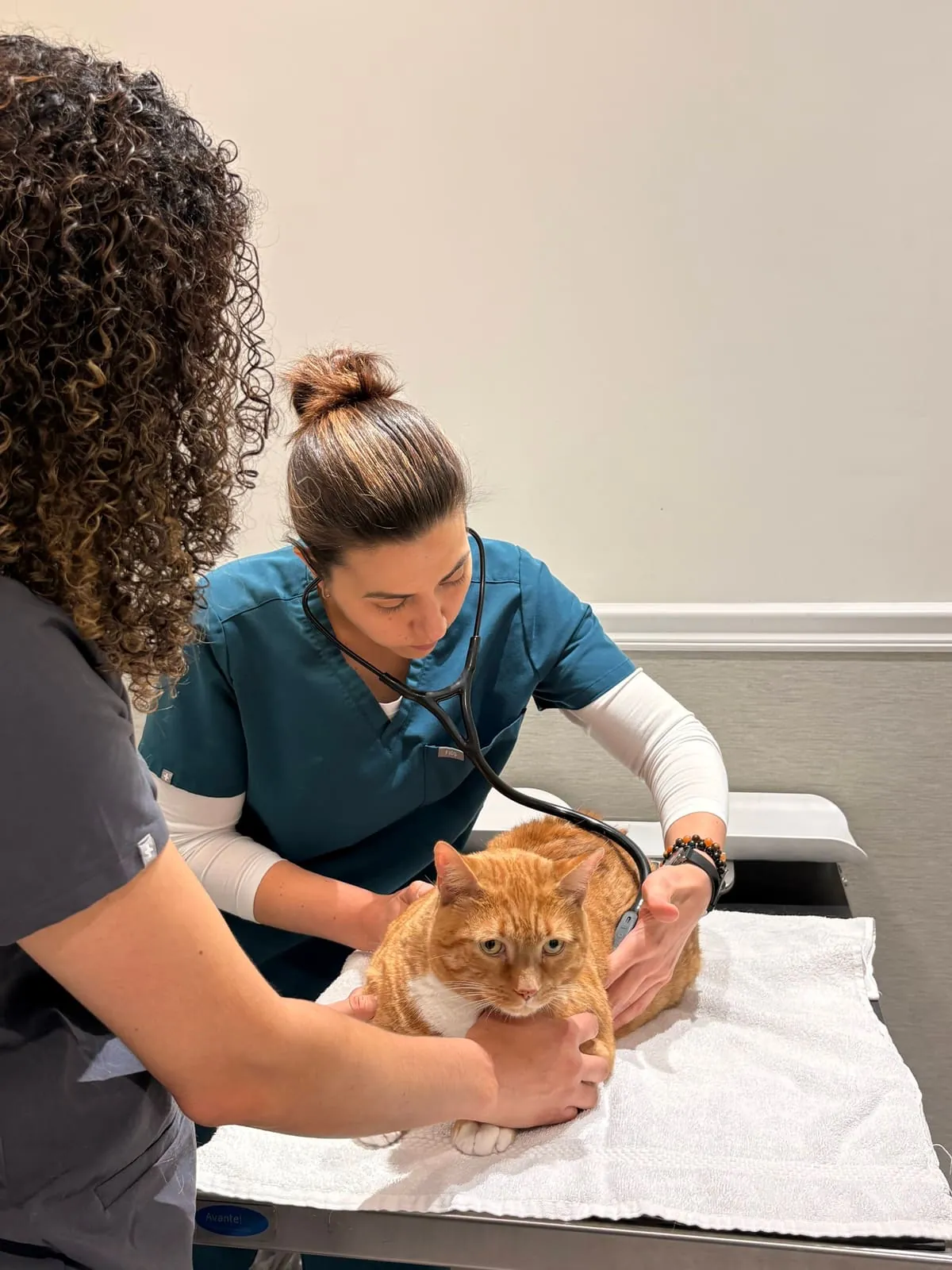
Most canine and feline atopic dermatitis cases start in general practice, and many are well managed there. But for cases that don't resolve, client research makes a clear case for referring to a board-certified veterinary dermatologist earlier rather than later. Earlier referral saves clients money, improves outcomes, and makes clients think more of their primary care veterinarian, not less. And done well, it isn't a hand-off at all: it's a collaboration in which the primary care practice stays at the center of the pet's care.
Key Takeaways
- Raise referral on or before the third visit for the same dermatologic problem: 73% of surveyed dermatology clients had made more than three primary care visits before being offered one.
- 82% of clients said they would have felt better about their primary care veterinarian if they had been referred earlier.
- Clients would have saved about 25% in costs if referred by the third visit.
- Referral is a collaboration: the dermatologist adds a diagnosis and plan, and the patient comes back to you for ongoing care.
What Clients Say About Referral Timing
A survey of 283 clients of veterinary dermatology practices in the United States and Canada, funded by the American College of Veterinary Dermatology (ACVD), looked at what happened before their pets were referred. The findings, reported in a two-part dvm360 series (part 1, part 2), are worth knowing:
| Finding | Share of clients |
|---|---|
| Visited their primary care veterinarian more than 3 times before being offered a referral | 73% |
| Would have felt better about their primary care veterinarian if referred earlier | 82% |
| Are more satisfied with and confident in their primary care veterinarian when referred to a board-certified dermatologist | 58% |
| Would not return to their primary care veterinarian for pressing medical issues | 38% |
| Stopped bringing their pet to their primary care veterinarian for routine care | 15% |
The cost and outcome findings point the same way. Clients would have saved about 25% if they had been referred by the third visit. And while 16% to 28% of treatments prescribed in primary care were reported as ineffective, only about 4% of treatments prescribed by veterinary dermatologists were.
The Third-Visit Rule
The survey identified a tipping point of client frustration at around three visits, or roughly $925 spent, without resolution. The series' recommendation is simple: talk with clients about a dermatology referral on or before the third visit for the same dermatologic condition. Raising it doesn't commit anyone to referring. It gives the client the option before frustration sets in, and that alone changes how they see your practice.
Other Signals That Point Toward Referral
- Diagnostic uncertainty. Overlapping or resembling conditions haven't been confidently ruled out, or the clinical picture doesn't fit cleanly.
- Treatment plateau. The case has been through more than one reasonable treatment attempt without durable improvement.
- Secondary infection cycling. Recurrent bacterial or yeast infections that keep returning despite appropriate treatment, suggesting an unaddressed underlying driver.
- Testing or formulation complexity. The case would benefit from intradermal allergy testing or a more individualized immunotherapy protocol than is practical to manage in-house.
- Client fatigue. The owner has been managing this for a long time without a clear long-term plan, and is asking, explicitly or implicitly, whether there's another option.
Referral Is a Collaboration, Not a Hand-Off
The dvm360 series frames referral as collaborative care: primary care veterinarians and specialists working together to give the pet the best options within each client's resources, values, and goals. In practice, that division of labor usually looks like this:
| Primary care veterinarian | Veterinary dermatologist |
|---|---|
| Recognizes the case isn't resolving and raises referral early | Confirms the diagnosis, including intradermal testing where needed |
| Sends history and prior treatments ahead of the visit | Builds the long-term plan, such as an immunotherapy protocol |
| Provides ongoing care: wellness, refills, monitoring, flare management | Stays available for rechecks and cases that plateau again |
| Keeps the client relationship and the patient's full history | Reports findings and the plan back to the referring practice |
Framed this way to clients, as adding a specialist to their pet's team rather than replacing their regular veterinarian, referral becomes a sign of a practice that knows when to bring in expertise. That's exactly what the 58% and 82% figures above reflect.
Making the Collaboration Work
A few habits make a referral genuinely useful rather than just a name and a phone number:
- Send the history ahead. Prior diagnostics and treatment attempts save the client from re-explaining months of history from memory.
- Set expectations. Tell the client what a dermatology workup typically involves and roughly how long it takes.
- Close the loop. Follow up after the visit so you're in step with the plan when the patient returns to you.
- Plan the long term together. Agree up front which parts of the plan the primary care practice will maintain, from refills to rechecks.
Where Immunotherapy Fits
Long-term immunotherapy is a natural shared-care model. The dermatologist identifies the allergens and sets the protocol; the primary care practice dispenses, monitors, and keeps the plan on track for the year or more that immunotherapy needs. Delivery method matters here, because a protocol the client can keep up with at home is one the primary care practice can maintain. Allibre's once-daily transdermal cream, applied to the ear flap with no injections or food restrictions, was developed with board-certified dermatologists with exactly this kind of long-term adherence in mind. See Inside the Allibre Protocol for how it runs month to month, and why compliance is the missing variable in allergy outcomes.
What a Dermatology Workup Typically Adds
It helps to be specific with clients about what a referral actually adds beyond "a second opinion." Intradermal allergy testing generally requires specialized equipment, sedation protocols, and pattern-recognition experience that's hard to justify in a general practice with a handful of atopic cases a year. Video otoscopy for chronic ear disease, cytology interpretation on resistant cases, and individualized immunotherapy formulation for complex sensitization profiles are similarly volume-dependent skills. The survey reflects this: 46% of primary care diagnoses did not match the dermatologist's. None of this is a knock on general practice. It's the same logic behind any specialty referral. Naming the specific capability being added makes the referral easier for a client to say yes to.
Common Questions
When should I first bring up a dermatology referral? On or before the third visit for the same dermatologic problem. An ACVD-funded survey of dermatology clients found that 73% had visited their primary care veterinarian more than three times before being offered a referral, and that clients would have saved about 25% if they had been referred by that third visit.
Will referring cost my practice the client? The survey data points the other way. 82% of clients said they would have felt better about their primary care veterinarian if they had been referred earlier, while 15% of clients whose problem stayed unresolved stopped bringing their pet in for routine care altogether. A well-run referral typically returns the patient to you for ongoing care.
What if the client is hesitant to see a specialist? Framing it as adding a specialist to the team, rather than "I can't handle this," tends to land better. Most clients respond well to a straightforward explanation of which specific signal (repeat visits without resolution, cycling infection, testing complexity) is driving the recommendation.
Should immunotherapy delivery be part of the referral conversation? It's worth raising, especially for clients who struggled with a previous plan. Delivery method is one of the more fixable parts of a treatment plan, and a protocol the client can actually keep up with is one the primary care practice can maintain after the referral.
See the full clinical data, then register your clinic to start ordering.
Start Ordering